You can get a website built for $800. You can also get one built for $80,000. Most of the difference is real, and most of the visible difference is the smallest part of it. Here’s what gets quietly skipped when websites are built cheaply, and what it costs you over the next three years.

The first skip: discovery
A real project starts with a brief. Someone asks who the customer is, what the goal of the site is, what the conversion path looks like, what content is actually needed, what the stack constraints are. They write this down. They get it signed off.
A cheap project starts with “I’d like a website. Here’s the look I want.” There’s no brief. The agency starts designing, the client doesn’t push back because nothing seems wrong yet, and three weeks in everyone realises the site doesn’t actually do what the business needs.
The cost: 2–4 weeks of redesign once it becomes clear, or worse, a launched site that doesn’t convert because it was built for a hypothesis nobody articulated.
The second skip: content strategy
Real websites have content models. The team thinks through every page type, the relationships between them, what an editor needs to update, where structured data lives. They build templates that match the content, not the other way around.
Cheap websites are built around a stock theme. The content shapes itself to fit the theme’s pre-built sections. Two months in, the marketing team needs to add a new section type and discovers there’s no clean way to do it without a developer rebuilding the page.
The cost: every content addition becomes a custom development ticket. The site that was supposed to free the marketing team becomes a permanent dependency on whoever built it.
The third skip: performance
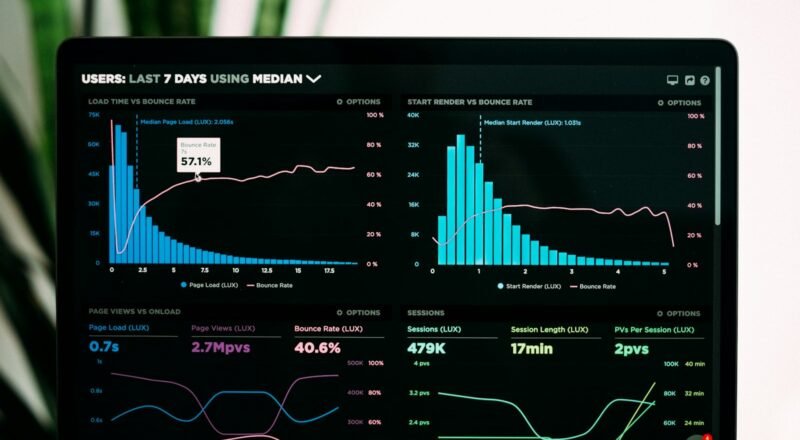
A real build measures performance from the first day of development. Image optimisation is automatic, JavaScript is split, CSS is purged, and the launch is gated on hitting Core Web Vitals targets.
A cheap build hits “good enough” on a fast desktop browser and ships. On a 3G connection in a parking lot — the actual condition of half your mobile traffic — pages take 6 seconds to render.

The cost: lower conversion, lower SEO rankings, and visitors who learn that your site is slow and stop coming back. The traffic you spent money to acquire leaks away on a problem you can’t see in your office.
The fourth skip: editor experience
Real builds give content editors clean, constrained tools. Custom blocks, sensible defaults, help text where decisions get made. An editor can update the homepage in 5 minutes without breaking anything.
Cheap builds drop the editor in front of a generic page-builder interface with 200 widgets. They can do anything. They will do everything. The homepage drifts toward chaos as different team members add their own touches.
The cost: every content change risks breaking the layout. The marketing team becomes timid about updates. The site stagnates. Or worse, they don’t become timid, and the homepage ends up looking like a bulletin board.
The fifth skip: documentation
Real projects ship with documentation. Where the staging environment lives, how to deploy a change, what the plugin list does, who to call when something breaks, where the backups are stored.
Cheap projects ship with one email and a credentials spreadsheet. Six months later when you need something fixed and the original developer is unavailable, the new developer spends a billable day reverse-engineering the site before they can help.
The cost: every developer transition is expensive. Knowledge that should have been written down lives in someone’s head. When that someone leaves, the knowledge goes with them.
The compound problem
None of these skips is fatal individually. A site can launch without proper discovery and still be useful. It can have mediocre performance and still convert some visitors. It can have a clunky editor experience and still get content updates done.
The compound problem is that all five skips happen together, and they reinforce each other. The skipped discovery means the site doesn’t fit the business. The missing content strategy means the site can’t adapt as the business changes. The poor performance means the traffic that does arrive doesn’t convert well. The bad editor UX means content updates are scarce. The missing documentation means every fix is a project.
Three years later, the cheap site is a millstone. The business has outgrown it. Updates are expensive. Performance is poor. The redesign that was supposed to never be needed is now urgent.
The honest math
A custom WordPress build at $6,500 versus a page-builder build at $2,500. The price gap is $4,000. Spread across three years, that’s $111 a month. Most businesses spend more than that on a single tool they barely use.
What the $4,000 buys: a site that compounds value rather than burning it, a foundation the business can build on without recurring rebuild costs, and a year-three position where the marketing team is shipping content instead of fighting the CMS.
This isn’t an argument for spending more for the sake of it. It’s an argument for doing the math honestly. Cheap is cheap on day one. By month 30, cheap is usually expensive.
For the build comparison specifically, our website pricing guide walks through the tiers, and our build comparison is the technical deep dive. Both are designed to help you do the right math, not the easy math.