
If you’ve talked to a few WordPress agencies, you’ve heard both pitches. Page builders save you money. Custom code is “real WordPress.” Both pitches are partially true and partially marketing. Here’s an honest comparison.

What you’re really comparing
Page builders (Elementor, Bricks, Breakdance, Divi) are WordPress plugins that add a visual editor on top of WordPress. They generate the HTML, CSS, and JavaScript that gets served to your visitors. The pages live as collections of widgets and styling rules in your WordPress database.
Custom-coded WordPress themes are written by hand in PHP, HTML, and CSS. The page structure lives in template files. The output is direct: WordPress assembles the content from your database with a templating function, and the result is what gets served.
That difference shapes everything: cost, performance, maintainability, editor experience, and lock-in.
Performance
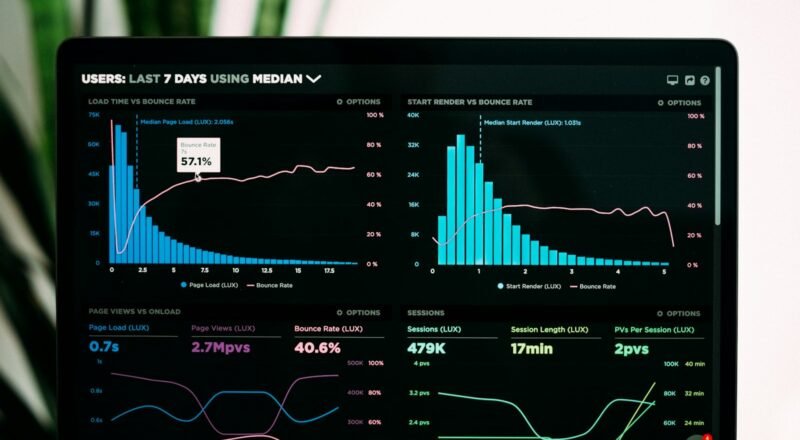
Page-builder sites are heavier. The widgets they offer come with their own CSS and JS, and the builder loads its full stylesheet on every page even when you only used three components. A page-builder site of 50 pages typically delivers 800KB–1.5MB of CSS and JavaScript before any content. Custom-coded equivalents land at 80–250KB.
This shows up directly in Core Web Vitals scores, page-load times, and SEO rankings. The gap is closing — newer builders like Bricks output much cleaner code than Elementor — but it’s still a real difference.
Editor experience
This one cuts the other way. Page builders offer a much richer editing experience for non-technical content teams. They can change layouts, swap in new sections, and experiment with the design without filing a developer ticket. Custom-coded themes constrain editors to whatever blocks the developer built — which is usually a feature, but only if the blocks were built well.

Cost and timeline
Page-builder sites are 30–60% cheaper to build than custom-coded equivalents. A site that costs $2,500 with a page builder costs $6,500 fully custom. The build timeline shrinks from 4–6 weeks to 2–3.
What changes is the long-term cost. Page-builder sites accumulate bloat as editors add widgets without removing old ones, and they lock you into the specific builder you chose. Migration off Elementor 5 years from now will cost you a meaningful percentage of the original build.
Maintenance and lock-in
Page builders update frequently, and updates occasionally break things. The builder ecosystem evolves — Elementor and Divi were the dominant players five years ago, Bricks and Breakdance are catching up now, and the landscape will look different again in five years.
Custom-coded themes don’t have this problem. The code you have today is the code you’ll have in five years, unless you decide to change it. Any developer who knows WordPress can pick it up and continue work.
Which to choose
Page builder if: budget under $4,500, simple content needs, marketing team that wants to make layout changes themselves, OK with the long-term lock-in.
Custom-coded if: budget over $5,500, performance matters (you’re investing in SEO or paid traffic), you want long-term portability, you have a content team that’s fine with constrained block patterns.
For most US B2B businesses, the right answer is custom-coded if budget allows, and a clean page-builder build if it doesn’t. Our essay on page builders goes deeper on why we made this call for our own work, and our custom theme service handles the build at a fixed $6,500.
The right call depends on your context. The wrong call is signing up for one when you needed the other and discovering it 18 months in.