
SaaS founders sometimes treat their marketing site like a product. They version it. They run sprints on it. They build a roadmap. They argue about feature parity with competitors.
This is mostly a mistake. Marketing sites and products are different things, and applying product thinking to marketing-site work produces worse marketing sites and worse products. Here’s the frame that works.

What a product is
A product solves a recurring user problem in a way that creates economic value over time. The user comes back because the problem keeps recurring. The product gets better through iteration based on observed usage. The metric of success is some version of “did the user accomplish their goal and come back next time?”
Slack is a product. Stripe is a product. Notion is a product. Each solves a problem the user has repeatedly, gets used in a sustained way, and improves through use.
What a marketing site is
A marketing site has one job: convert qualified visitors into customers or qualified leads. It does this by helping the visitor make a decision. The visitor isn’t there to use the site. They’re there to evaluate something — usually the company behind the site, or the offer being made.
The metric of success isn’t engagement, retention, or returning visits. It’s conversion: the visitor took the action you wanted them to take.
Most product-thinking concepts don’t translate cleanly to this. “Activation” doesn’t apply — you don’t want activated visitors, you want decided ones. “Retention” is mostly bad — your most valuable visitors arrive once and leave a contact form. “Engagement” is a vanity metric — a visitor who reads three pages and bounces converted less than one who read the homepage and clicked the CTA.
The product fallacy
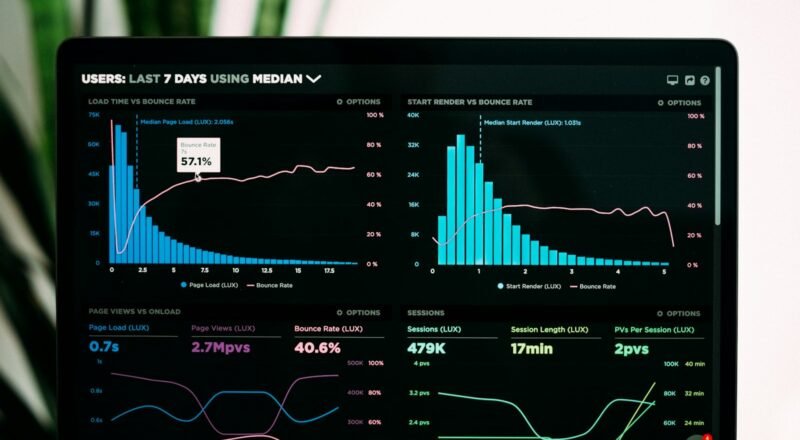
The fallacy is treating the marketing site as something to be optimised through continuous iteration on engagement metrics. Founders watch heatmaps, A/B test endlessly, and iterate based on what visitors clicked.
This produces sites that are excellent at holding visitor attention but bad at converting them. Engaged visitors aren’t customers. The site becomes a magazine. Bounce rate looks great. The pipeline stays the same.

The right metric is conversion rate, and the right input to that metric is mostly not visible in analytics. It’s the clarity of the value proposition, the credibility of the offer, the specificity of the case studies, the strength of the proof. These don’t get tested in a heatmap. They get fixed by writing better copy.
What marketing-site work actually looks like
The work that improves marketing sites is mostly not iterative. It’s quarterly to semi-annual:
Quarterly: refresh the proof. New case studies, new testimonials, new social proof, updated metrics. The site shouldn’t say “200+ projects shipped” forever — that becomes 800+ over time, and the visitor notices.
Semi-annually: re-test the positioning. Talk to recent customers about why they chose you. The reasons change. The marketing site should reflect what’s actually working in sales conversations, not what worked 18 months ago.
Annually: rebuild the high-traffic pages. Homepages, key landing pages, primary case studies. These compound value when they’re excellent. They should get serious investment once a year, not constant tinkering.
That’s it. There’s no daily roadmap, no sprint cycle, no engagement-based iteration loop. The work is dense and infrequent.
What product thinking does work for
Some pieces of marketing infrastructure do benefit from product thinking. The free tools you give away. The interactive calculators. The configuration wizards that help visitors self-qualify. These have repeat usage, they get better through iteration, and they’re real engagement-based properties.
But notice that these aren’t the marketing site. They’re products that live near the marketing site. Treating them as products is correct. Treating the homepage as a product is incorrect.
The corollary for agencies
For agencies (us, anyway), this means we treat client websites as marketing-site work, with marketing-site cadence. We don’t sell ongoing “optimisation” retainers that quietly produce inconsistent A/B test wins on minor metrics. We deliver excellent sites, hand them off, and come back for the substantive refresh work when it’s actually needed.
This sometimes loses us retainer revenue. We’re fine with that. The honest version of “do you need ongoing marketing-site optimisation?” for most B2B service businesses is “no, you need a great site that you refresh deliberately.” Selling them anything else is a slow drain on their budget.
For more on this approach, our small-agency manifesto covers the operating model, and the fixed-pricing argument explains why we structure projects this way.
The takeaway
If you’re a founder running your marketing site like a product, the question to ask is: what specifically would change if I treated this as a marketing site instead? The honest answer is usually: less iteration, more thinking, better copy, fewer A/B tests, and a higher conversion rate.
Marketing sites and products both deserve craft. They don’t deserve the same craft. The agencies and founders who keep them straight tend to do both better.